Estimated Reading Time: 5 minutes
When you’re hiring—especially for remote roles—you’re not just looking for someone who can perform a task. You’re looking for someone who can work independently, communicate clearly, and integrate smoothly into your team without requiring constant oversight. At the same time, you’re juggling deadlines, managing current staff, and trying not to lose an entire week buried under resumes and interviews that lead nowhere.
You’re not alone. Many business owners quietly think, “There has to be a faster, smarter way to hire without sacrificing quality.”
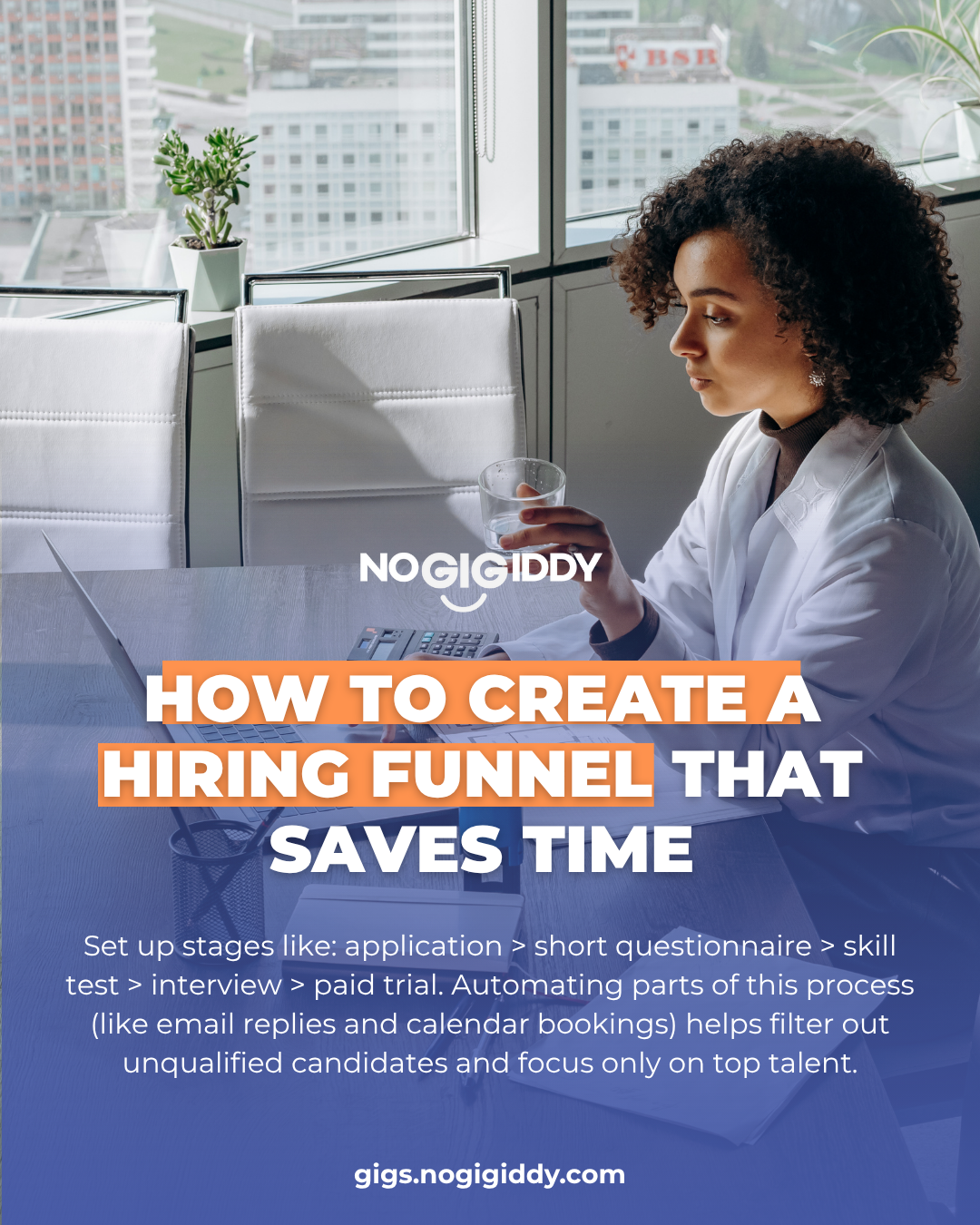
At NoGigiddy, we hear this every day—and the answer is yes. A streamlined hiring funnel can save hours of work, lower recruiting costs, and dramatically increase the quality of the candidates you bring on.
This article will walk you through:
• Why a structured hiring funnel matters
• The stages every efficient hiring funnel should include
• How automation can reduce workload and improve consistency
• How to train remote workers successfully once they’re brought into the funnel
By the end, you’ll know exactly how to build a hiring system that works—one that saves time, filters out unqualified applicants, and positions your team for long-term remote success.

Why a Structured Hiring Funnel Matters
If you’ve ever interviewed someone who looked perfect on paper but fell apart the moment work began, you already know why a funnel is essential.
A hiring funnel:
• Filters applicants progressively instead of overwhelming you with information
• Ensures every candidate gets evaluated fairly and consistently
• Creates a smooth, predictable experience for both you and the applicant
• Protects your time by removing unqualified candidates early
• Helps identify people who can not only talk well but work well
A structured, step-by-step funnel allows you to spend your time where it matters—interviewing only the best candidates and making confident hiring decisions.
Step 1: The Application Stage
This is where candidates submit their resumes and basic information. At this point, you’re simply screening for minimum qualifications, work history, and the ability to follow directions.
What candidates are thinking:
“I hope they can see why I’m a good fit.”
What you’re thinking:
“Just show me consistency and professionalism.”
A clean, quick application process starts the relationship off right.
Step 2: The Short Questionnaire
This is a simple but powerful tool. A thoughtful questionnaire immediately reveals whether a candidate understands the role, aligns with your expectations, and communicates well in writing.
Ask questions like:
• What interests you most about this position?
• Describe how you manage deadlines while working remotely.
• What software or tools have you used in past remote roles?
This step alone removes 40–60% of applicants who cannot communicate clearly or provide thoughtful responses.
Related Articles: https://gigs.nogigiddy.com/blog/what-questions-to-ask-when-interviewing-remote-candidates
Step 3: The Skill Test
This is where good talkers and good workers separate.
The most successful companies never rely purely on interviews; they want to see work samples or role-specific exercises that reflect real job tasks.
Examples include:
• A short customer support mock email
• A data entry accuracy test
• A sample research assignment
• A short content draft
• A mock phone script recording
Skill tests measure performance—not personality—which is exactly what you need.
Related Article: https://gigs.nogigiddy.com/blog/top-10-qualities-to-look-for-in-a-remote-worker
Step 4: The Interview
By the time you reach this stage, you’re not wasting time on guesswork. You’re evaluating strong candidates who have already proven their communication skills and basic competency.
Use the interview to assess:
• Cultural fit
• Professionalism
• Remote communication style
• Problem-solving skills
• Alignment with team expectations
This is also a chance to make sure the candidate understands your remote work standards, meeting rhythms, and performance expectations.
Step 5: The Paid Trial Task
This is one of the most valuable steps in any hiring funnel. A short paid assignment offers a realistic preview of what working with the candidate will be like.
It allows you to see:
• How they interpret instructions
• How quickly they work
• How they respond to feedback
• Their ability to meet deadlines independently
A paid trial reduces hiring mistakes significantly and demonstrates fairness and transparency on your part.

Build a Better Hiring Funnel Starting Today
A well-structured hiring funnel isn’t just a time-saver. It’s a business growth tool. When you know exactly what to evaluate, how to filter applicants, and how to support new hires, your team becomes stronger—and the right people rise to the top naturally.
If you’re ready to start attracting better remote candidates, NoGigiddy makes it easy.
Post your first job on our site for free:
Let us help you build the remote team that will drive your business forward.