Estimated reading time: 5-minutes
Quarter 1 sets the tone for your entire year.
You are looking at your goals. Revenue targets. Expansion plans. Hiring needs. You may be thinking:
“We need great people — but we can’t afford slow hires.”
“How do we grow without increasing overhead?”
“How do we make sure remote employees actually perform?”
“What if we hire quickly and regret it later?”
At NoGigiddy, we understand exactly what you are feeling at the start of a new quarter. Q1 is momentum season. It is when you decide whether your team will operate reactively — or strategically.
In this article, you will learn:
- Why remote culture is a competitive advantage in 2026
- How to hire people who thrive remotely
- How to set clear expectations from day one
- How to build trust, communication, and accountability across distributed teams
- How to train remote workers to deliver measurable results
- How to scale without increasing operational drag
If you are building or expanding your team this quarter, this is your blueprint.
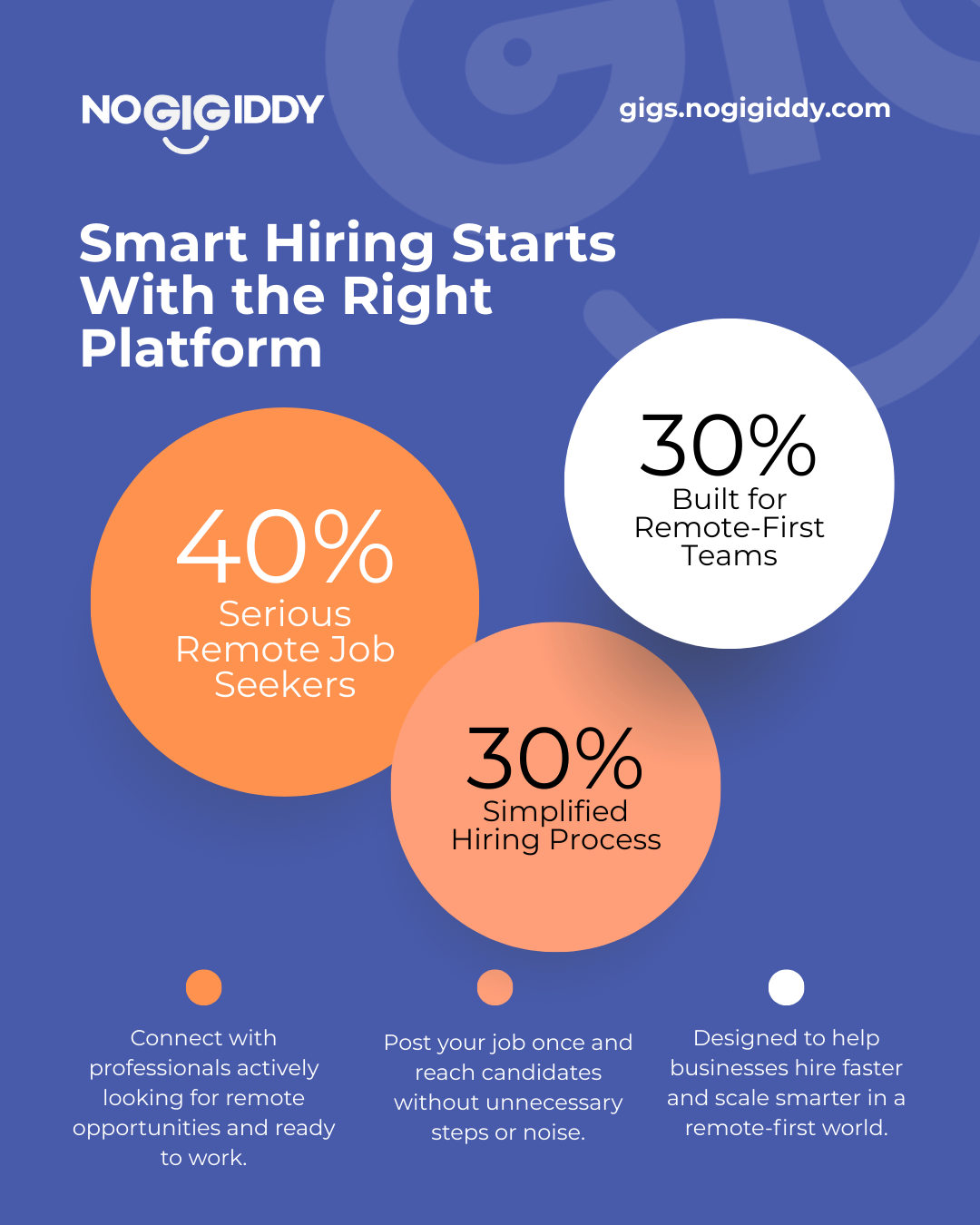
Hiring in 2026: Remote-First Is No Longer Optional
Remote-first teams are no longer a trend. They are the advantage.
Businesses that embrace remote hiring gain:
- Access to wider talent pools
- Faster hiring cycles
- Lower overhead
- Greater flexibility to scale
But here is the truth most leaders do not say out loud:
Hiring remote workers is easy.
Building a strong remote culture is not.
Culture is not built by accident. It is built intentionally — from the moment you post the job.
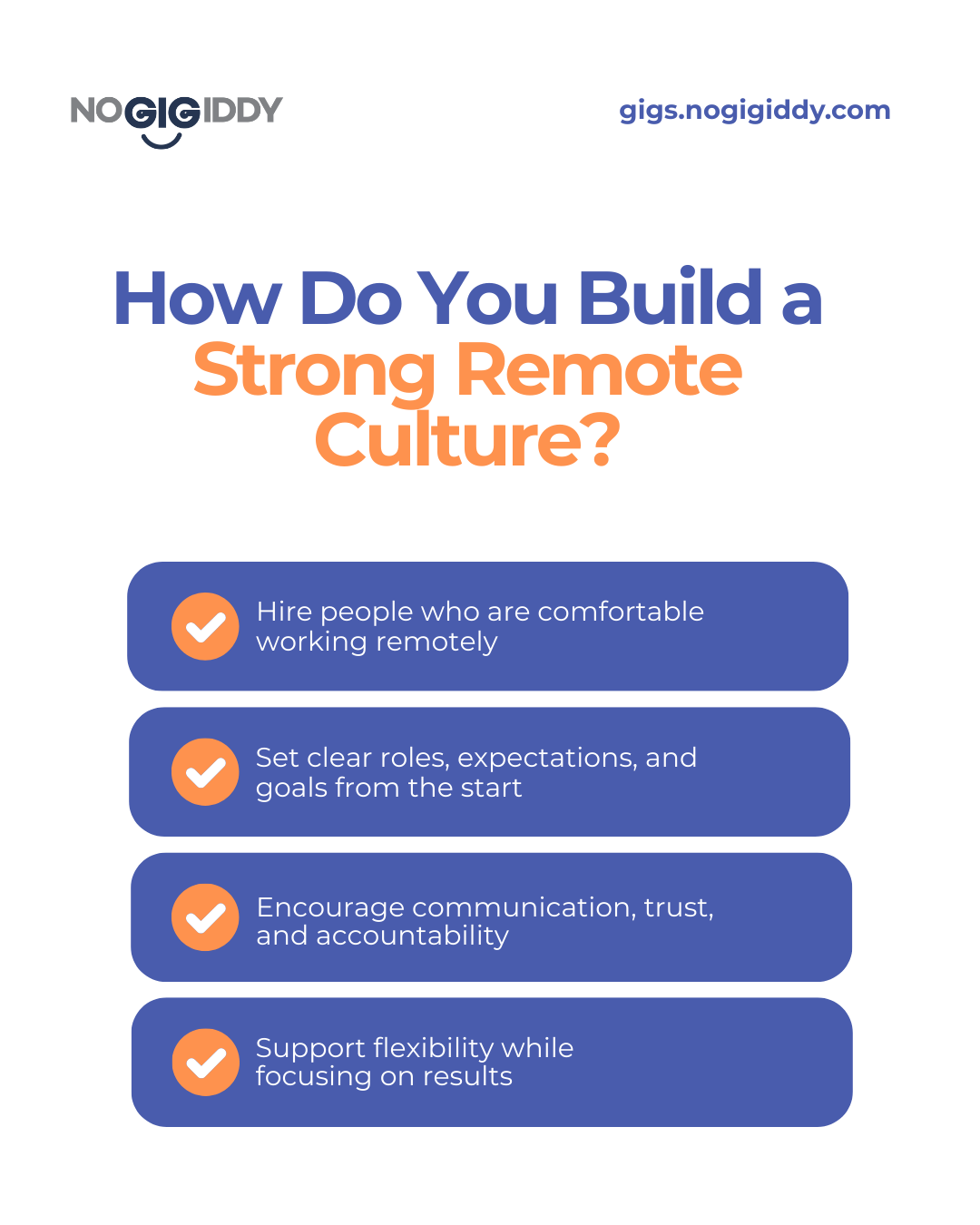
Step 1: Hire People Who Are Comfortable Working Remotely
Not every strong candidate thrives in a remote environment.
In Q1, as you review resumes, ask yourself:
- Has this person worked remotely before?
- Can they manage their time independently?
- Do they communicate clearly in writing?
- Have they demonstrated ownership of projects?
Remote work requires self-discipline, clarity, and proactive communication. You are not just hiring for skill — you are hiring for autonomy.
During interviews, go deeper:
- Ask how they structure their workday.
- Ask how they handle missed deadlines.
- Ask how they stay aligned with teams across time zones.
When you hire people who are naturally comfortable working remotely, you reduce micromanagement and increase productivity.
Related Article: https://gigs.nogigiddy.com/blog/how-to-create-a-hiring-funnel-that-saves-time
Step 2: Set Clear Roles, Expectations, and Goals from the Start
Many remote hiring failures are not talent problems — they are clarity problems.
In Q1, your team should know:
- What success looks like
- What metrics matter
- What deadlines are non-negotiable
- How performance is measured
Ambiguity is expensive.
Strong remote culture begins with defined roles and measurable outcomes. Instead of vague expectations like “support the team,” define:
- Deliverables
- KPIs
- Weekly reporting structure
- Communication channels
- Escalation processes
Clarity builds confidence. Confidence builds momentum.
When expectations are clear, accountability becomes natural — not forced.
Step 3: Encourage Communication, Trust, and Accountability
One of your biggest concerns may be:
“How do I know they are actually working?”
The answer is not surveillance. It is structure.
High-performing remote teams rely on:
- Weekly goal check-ins
- Transparent project tracking tools
- Clear response time standards
- Open communication channels
Trust is built through consistency.
When employees know:
- What they are responsible for
- When they are expected to deliver
- How progress is reviewed
You eliminate guesswork.
And when accountability is tied to results — not hours — performance improves.
Step 4: Support Flexibility While Focusing on Results
Remote culture does not mean chaos. It means results-driven flexibility.
You may be thinking:
“If I give flexibility, will productivity drop?”
The opposite is often true.
When remote workers:
- Have clear outcomes
- Feel trusted
- Are empowered to manage their schedules
They perform better.
Flexibility reduces burnout. Burnout reduces performance. Strong culture prioritizes sustainable productivity.
In Q1, consider implementing:
- Outcome-based reviews
- Monthly performance alignment calls
- Clear documentation of workflows
- Recorded training resources for onboarding
Flexibility works when structure exists.
Step 5: Train Remote Workers to Deliver
Hiring is only step one.
If you want your remote team to truly deliver this year, training must be intentional.
High-performing remote organizations:
- Provide structured onboarding
- Use written SOPs
- Host virtual team introductions
- Schedule early milestone reviews
- Offer ongoing feedback loops
New hires should know within their first 30 days:
- What winning looks like
- How their role impacts revenue or growth
- Where to go for answers
- Who owns what internally
Training reduces friction.
Friction reduces momentum.
Momentum drives Q1 performance.
Related Article: https://gigs.nogigiddy.com/blog/build-a-remote-team-that-delivers
Your Q1 Action Step
If expanding your team is part of your growth strategy this quarter, start today.
Post your first job for free and connect with qualified remote talent here:
The right hire this quarter can define your entire year.
Make it strategic.