Estimated reading time: 5-minutes
What You’ll Learn in This Article
If you’re heading into Q1 thinking, “We need to grow, but we can’t afford hiring mistakes,” you’re in the right place.
In this article, we’ll walk through:
- Why remote hiring is no longer a perk—but a strategic advantage
- How to think differently about scaling your team without increasing overhead
- What businesses get wrong about remote workers (and how to fix it)
- How to train, onboard, and develop remote talent that actually delivers
- How to set up your next hire for success from day one
By the end, you’ll have a clearer, calmer approach to hiring—and a concrete next step you can take immediately.

Let’s Be Honest About What You’re Thinking
Q1 is here, and with it comes pressure.
You’re looking at your goals, your pipeline, and your workload—and realizing your current team can’t carry everything alone. At the same time, you’re thinking:
- “I can’t afford another bad hire.”
- “I don’t have time to babysit someone new.”
- “What if I hire remote and it just doesn’t work?”
These are valid concerns. And they’re exactly why hiring remote, when done intentionally, becomes a growth strategy—not a gamble.
Remote hiring isn’t about cutting corners. It’s about building a smarter, more flexible workforce that allows your business to scale without adding unnecessary risk or overhead.
Remote Hiring Isn’t Optional Anymore—It’s the Advantage
Businesses that treat remote hiring as a short-term fix often struggle. The ones that treat it as a long-term strategy gain access to:
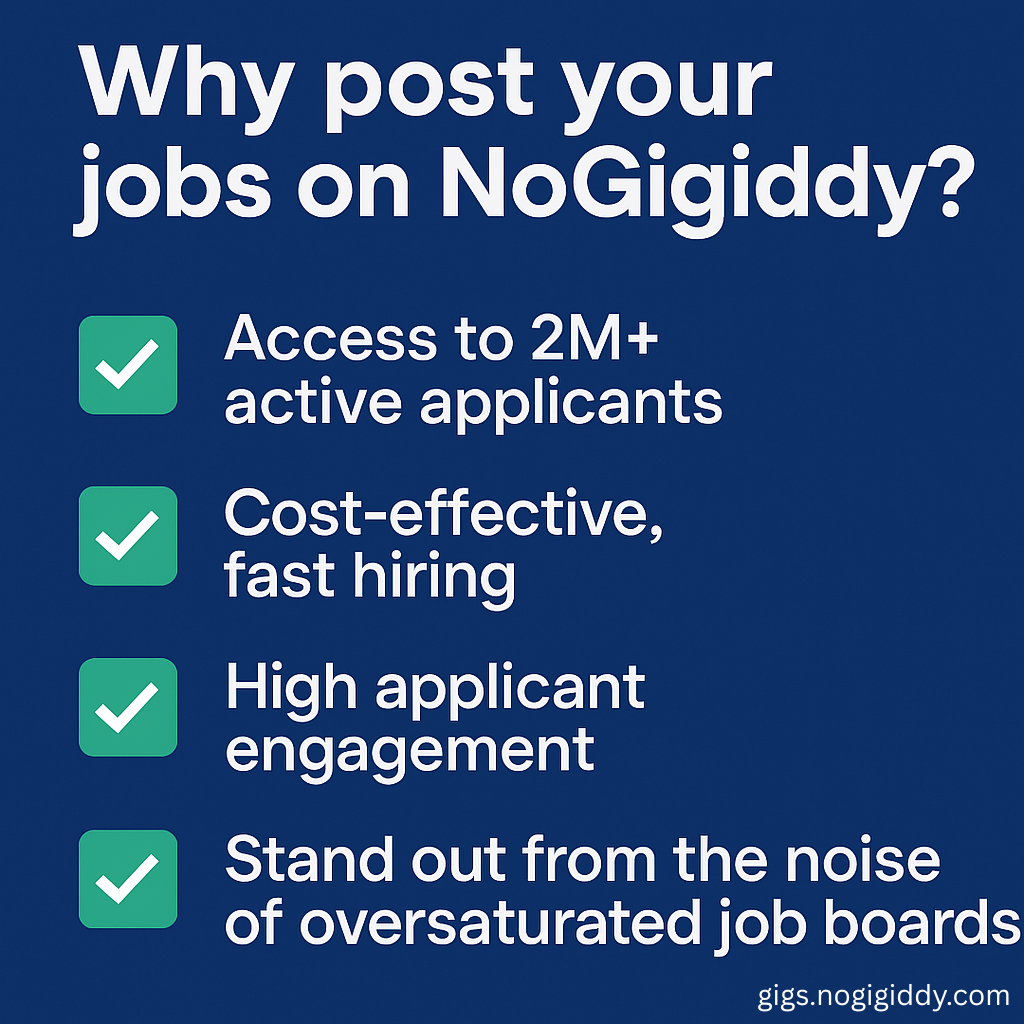
- Broader talent pools without geographic limits
- Faster hiring cycles
- Lower operational costs
- Teams that can scale up or down with demand
Remote-first companies aren’t winning because they hire remotely. They’re winning because they design systems that support remote work.
That distinction matters.
Related Article: https://gigs.nogigiddy.com/blog/why-remote-hiring-isn-t-just-for-big-companies-anymore
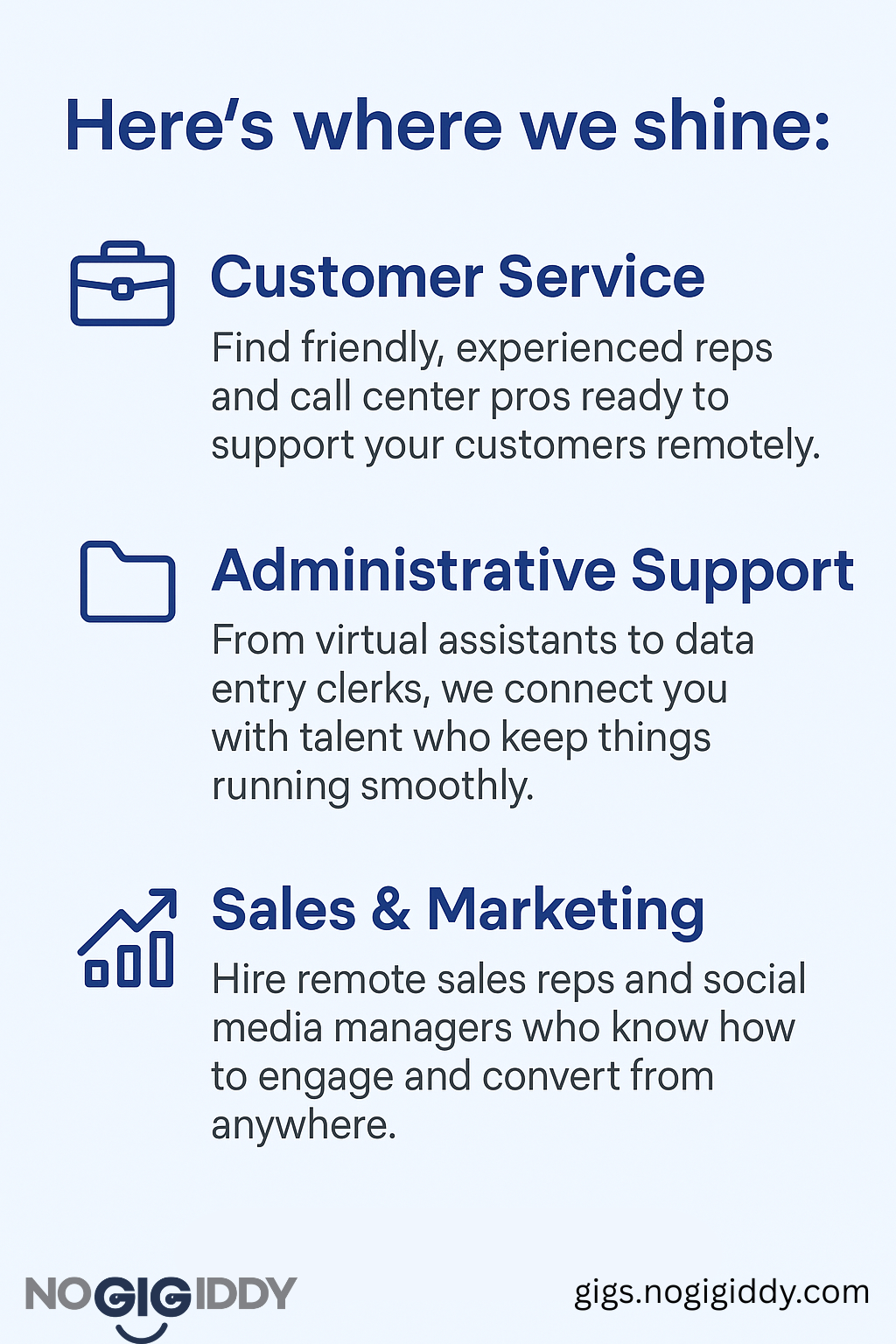
The Real Issue Isn’t Talent—It’s Structure
Most hiring challenges don’t come from hiring the “wrong” people. They come from unclear expectations, weak onboarding, and a lack of training systems.
Remote workers don’t fail because they’re remote. They fail when businesses expect them to “figure it out” without guidance.
Strong remote teams are built when businesses:
- Define success clearly
- Train intentionally
- Communicate consistently
When you put structure around the role, location becomes irrelevant.
How to Train Remote Workers for Long-Term Success
Training remote talent doesn’t require complex systems—it requires clarity.
Here’s what high-performing teams do differently:
1. Define Outcomes, Not Just Tasks
Instead of listing what someone does, define what success looks like:
- What should be completed in 30, 60, and 90 days?
- How will performance be measured?
- What does “great” actually mean in this role?
Clarity removes friction—for both you and the hire.
2. Create Repeatable Onboarding
Remote workers thrive when onboarding is structured:
- Written processes
- Recorded walkthroughs
- Clear communication channels
This reduces questions, speeds up ramp time, and builds confidence early.
3. Invest in Skill Development
Remote teams perform best when learning is ongoing. Regular check-ins, feedback loops, and upskilling opportunities keep talent engaged and productive.
Training isn’t an expense—it’s how you protect your investment.
Related Articles: https://gigs.nogigiddy.com/blog/why-you-should-always-test-for-skills-not-just-talk
Your Next Step Starts Here
If you’re ready to grow without increasing overhead—and want access to skilled remote professionals who are ready to contribute—NoGigiddy makes it simple.
You can post your first job for free, reach experienced remote talent, and start building a team that supports your business goals.
👉 Post your first job for free today:
Growth doesn’t come from doing more yourself. It comes from building the right team—at the right time, with the right structure.