Estimated reading time: 5-minutes
Q1 is when hiring decisions set the tone for the entire year.
In this article, you’ll learn how to simplify your remote hiring process, attract qualified talent faster, and—most importantly—build and train a remote team that actually delivers. We’ll walk through what employers are thinking right now, where remote hiring often breaks down, and how to create a repeatable system for long-term success.

Q1 Reality Check: You Need Talent—But You Don’t Have Time to Waste
If you’re hiring in Q1, you’re likely balancing pressure from multiple directions.
You want to grow.
You want results quickly.
You don’t want to overhire—or worse, hire the wrong person and spend months fixing it.
At the same time, you may be thinking:
- “I need someone experienced, but I can’t afford a long ramp-up.”
- “I don’t have time to sift through hundreds of unqualified applicants.”
- “Remote sounds great—but how do I make sure they actually perform?”
These concerns are valid. And they’re exactly why more businesses are shifting how and where they hire.
Remote hiring isn’t about casting a wider net anymore. It’s about finding skilled professionals who are ready to contribute from day one and building a structure that helps them succeed.
Related Article: https://gigs.nogigiddy.com/blog/how-to-onboard-remote-employees-so-they-feel-part-of-the-team
Why “One Place” Matters More Than Ever
One of the biggest mistakes businesses make is spreading their hiring efforts across too many platforms.
Multiple job boards.
Unfiltered applicants.
Endless follow-ups.
No consistency.
The result? Decision fatigue and delayed hires.
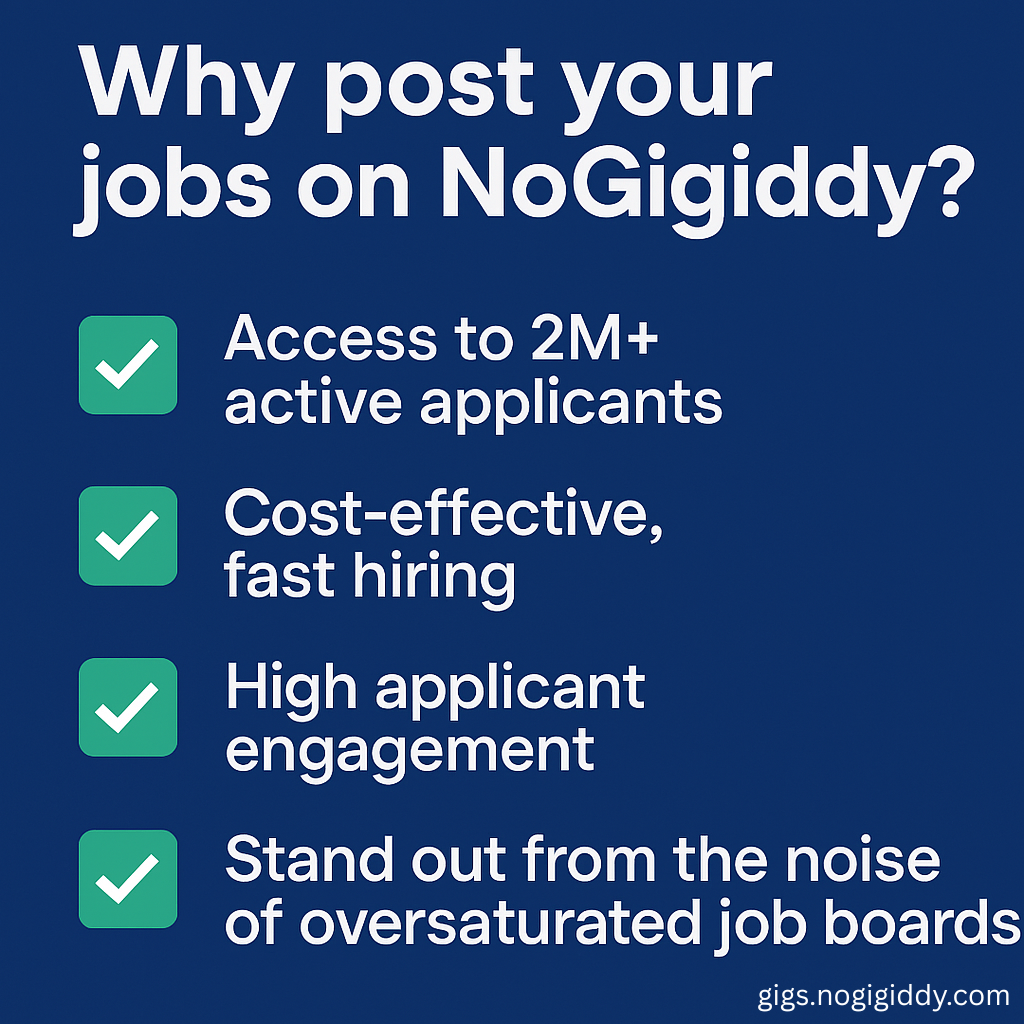
When you centralize your hiring—by posting in one place designed specifically for remote roles—you eliminate noise and focus only on candidates who are actively seeking remote work and understand what it requires.
That means:
- Fewer unqualified applications
- More intentional candidates
- Faster shortlists
- Better hiring conversations
Remote hiring works best when the talent pool already understands remote expectations.
Related Article: https://gigs.nogigiddy.com/blog/common-myths-about-remote-work-debunked
Hiring Is Only Step One—Training Is Where Performance Is Built
Finding skilled remote workers is critical. Training them well is what turns potential into performance.
High-performing remote teams are not accidental. They’re built with clarity and structure from the start.
Successful remote onboarding focuses on three things:
- Clear Expectations
- Remote employees perform better when success is defined early. Outline deliverables, communication standards, and timelines from day one.
- Process, Not Guesswork
- Document how work gets done. Simple SOPs, checklists, and shared tools reduce confusion and prevent bottlenecks.
- Early Feedback Loops
- Short check-ins during the first 30 days help remote workers course-correct quickly and build confidence.
When remote workers know what success looks like—and feel supported—they perform.
The Myth: Remote Workers Need More Management
The Truth: They Need Better Systems
Strong remote workers don’t need constant supervision. They need:
- Access to information
- Clear priorities
- Consistent communication
Businesses that succeed with remote teams shift their mindset from “monitoring” to enabling.
When your systems are solid, your team becomes scalable.
Your Next Step: Hire Smarter This Quarter
If Q1 is about building momentum, your hiring process should support that—not slow it down.
You don’t need more resumes.
You need the right people, in the right roles, at the right time.
Post your first remote job for free and connect with skilled remote professionals today:
Build your team with clarity.
Train with intention.
Scale with confidence.